In 2024 alone, extreme weather events caused global damages of USD 320 billion – 97% of which were weather-related, far exceeding the 10-year average. Heat waves strain production facilities, heavy rainfall disrupts supply chains, droughts threaten water availability. Physical climate risks are measurable today – in downtime, insurance premiums, and asset devaluation. The math is clear: 1 USD invested in climate adaptation saves over 10 USD in follow-up costs.
For boards, CFOs, risk managers, and sustainability leaders, this means: climate resilience is no longer a future concern – it's a strategic necessity. Those who systematically analyze, assess, and act today protect value creation, secure capital access, and strengthen competitiveness.


Pressure is mounting from multiple directions simultaneously: insurers are raising premiums or withdrawing from exposed regions, banks are integrating physical climate risks into credit decisions, and extreme weather events are occurring faster than many risk models predicted. Those who now establish systematic risk analysis and adaptation strategies act not only with regulatory foresight – they secure operational capability in a market environment that increasingly prices in resilience.
Climate adaptation requires more than data analysis – it demands strategic thinking and operational implementation expertise. With our long-standing experience in climate risk management and sustainability strategy, we combine scientific expertise with business practice. This creates solutions that not only meet regulatory requirements but deliver genuine business value.
Building on climate risk analysis, we systematically assess which adaptation measures already exist in your organization – and where critical gaps exist relative to identified physical climate risks. The gap analysis makes transparent which measures are needed to simultaneously meet the following requirement levels:
For each identified physical climate risk – such as heat, heavy rainfall, flooding, or storms – we assess the current status of existing protective and adaptation measures against the regulatory and resilience-based target state. Gaps are prioritized by urgency, liability relevance, and investment need. The result is a structured action register with clear recommendations – a solid foundation for investment decisions, reporting, and regulatory dialogue.
We compare your climate adaptation maturity with leading companies in your industry – based on documented best practices from energy supply, industry, and critical infrastructure. We identify which measures have already been effectively implemented in comparable contexts – and where your organization has gaps relative to the sector benchmark. Benchmarking creates orientation, increases internal conviction, and strengthens your positioning with investors and regulators.
Based on the gap analysis, we develop a prioritized action catalog – physical, operational, digital, and nature-based – assessed by risk reduction, cost-benefit, and feasibility. We strategically address protecting capital assets from climate-related value loss, early identification of stranded assets, assessment of climate-resilient alternative locations, and identification of more resilient suppliers to ensure supply continuity. This is complemented by a practical emergency and escalation plan with clear responsibilities, restart processes, and defined triggers – documented, trained, and auditable.
We translate results into an integrated climate adaptation strategy with concrete implementation roadmap – prioritized by urgency and investment cycles. The strategy links operational resilience measures with your corporate planning, financing structures, and CSRD reporting obligations. The result is a strategy document that creates internal commitment and externally – toward investors, insurers, and regulators – demonstrates your adaptation capability.
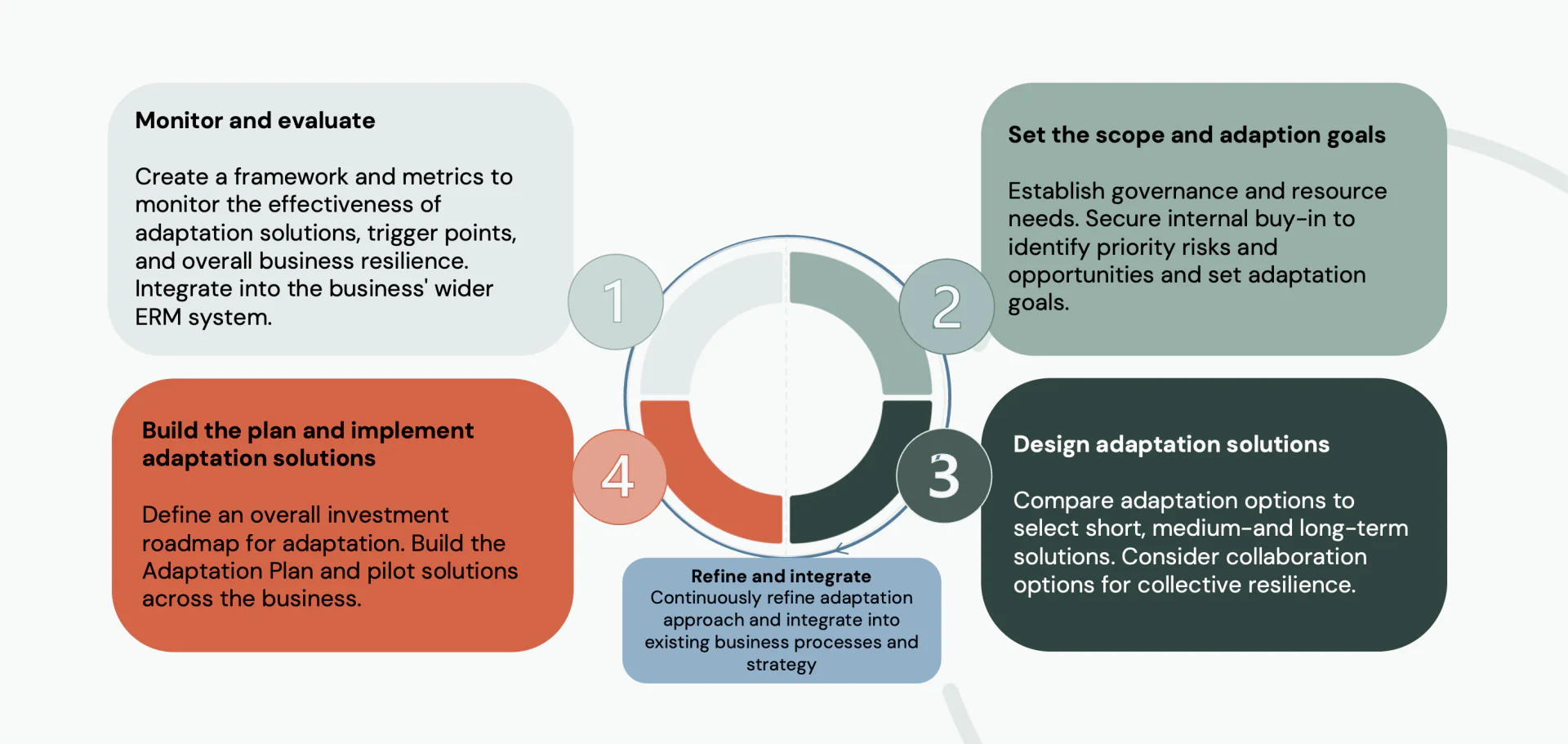


We embed climate adaptation structurally in your organization – with clear governance, integrated processes, and continuous monitoring. This transforms resilience from a project into a core competency.

Our analyses and measures are directly CSRD-compliant. You won't need to retrofit reporting requirements later – they're already integrated. This saves time and avoids last-minute work before the deadline

We think beyond climate risks alone – we also consider your financing structure, insurance landscape, and strategic positioning.


