Starting in 2026, ecodesign will determine market access in the EU. The Ecodesign for Sustainable Products Regulation (ESPR) is the new EU regulation that, for the first time, defines comprehensive sustainabilityrequirements for nearly all physical products, going far beyond the previous focus on energy efficiency. Durability, reparability, recyclability, recycled content, and the CO₂footprint will become mandatory design criteria. The first delegated acts, including those for textiles and steel, are expected starting in 2026; numerous other product groups will follow by 2030. For companies, this means they must realign their product design, datamanagement, and supplier and customer relationships.


In April 2025, the European Commission published the first ESPR work plan and prioritized over a dozen product groups. The requirements for ecodesign, information obligations, and the Digital Product Passport will take effect gradually, withtransition periods of at least 18 months following the adoption of the respective delegated acts. Companies that act early on not only ensure compliance but also gain real competitive advantages.
Opportunities for innovation through the integration of ecodesign criteria into product design
Cost reduction through optimized use of materials and energy
Resilient supply chains through material testing and substitution
Reliable database at the product level for suppliers, customers, and reporting
A basis for identifying new business models such as repair, refurbishment, and product-as-a-service
Protection against market access restrictions and sanctions through early compliance
With 16 ecodesign requirements, product group-specific delegated acts, the Digital Product Passport, and new information obligations, many companies are still unsure where to begin. At the same time, the new requirements have a direct impact on product design, data architecture, and supply chain processes.
We combine regulatory ESPR requirements with our core expertise in sustainability and climate strategies, the circular economy, life cycle assessment (LCA), and supply chain engagement. We bring together expertise in product data, design, and implementation, and use our in-depth knowledge of Product Carbon Footprint (PCF) and LCA to create a robust data foundation for your products.

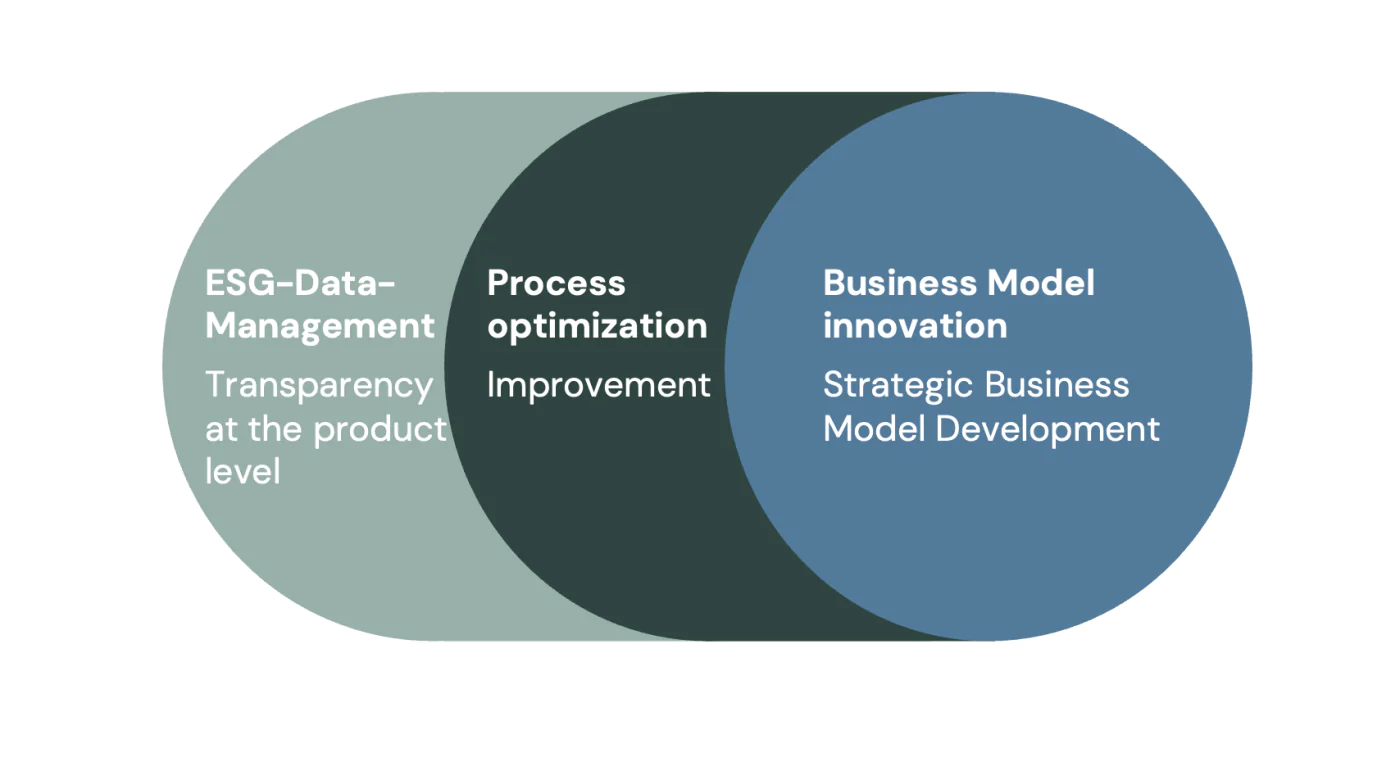
We conduct a gap analysis for selected products and review your existing data against the ESPR and DPP data requirements. Based on this, we develop a structured data map that shows which data is available, where gaps exist, and whichsources need to be tapped. Optionally, we identify synergies with existing initiatives, such as PCF activities or the Carbon Border Adjustment Mechanism (CBAM), to avoid duplication of effort and further develop existing data sets and processes.
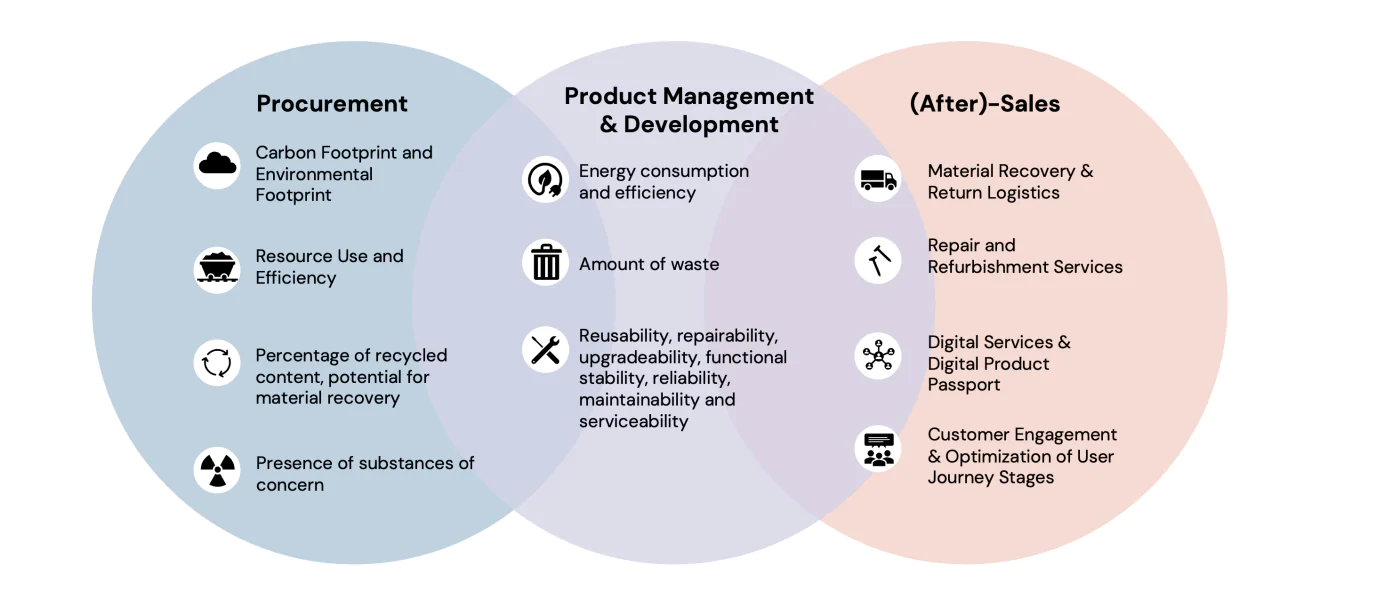
Regulatory requirements do not only affect the sustainability department; they impact product design, procurement, and sales in equal measure. In status quo interviews, we document the current processes in your departments and evaluatethe results of the gap analysis for each area. From this, we determine a maturity level that shows where your company stands and where the biggest gaps lie. In targeted workshops, we work together to develop specific measures to close thesegaps (e.g., determining the proportion of recycled material and the associated data strategy, including assigned responsibilities; Extended service life) and thereby ensure ESPR readiness in core operational processes. These requirements don’t apply to just one department—they extend throughout the entire product lifecycle.
The ESPR requires companies to maintain comprehensive documentation, both internally and externally. We work with you to develop the technical documentation required forinternal verification: a structured report detailing the processes, calculations, and measures taken to comply with the ecodesign requirements.
At the same time, we assist you in preparing the required external documentation, from product data sheets and CE marking to digital product passports. This allows you to ensure transparency for market surveillance authorities and consumers while providing comprehensive documentation of your compliance.


We view the ESPR in conjunction with your other sustainability initiatives—as a lever for transforming your products and business models.

We confidently guide you through every tool-related decision, backed by a strong network of IT partners.

We support you every step of the way—from data strategy and operational implementation to the digital product passport.


